
Valle de Bravo Real Estate: The Complete Guide for Second Home Buyers in 2026
I leave my house most mornings with a light jacket and a sweater.
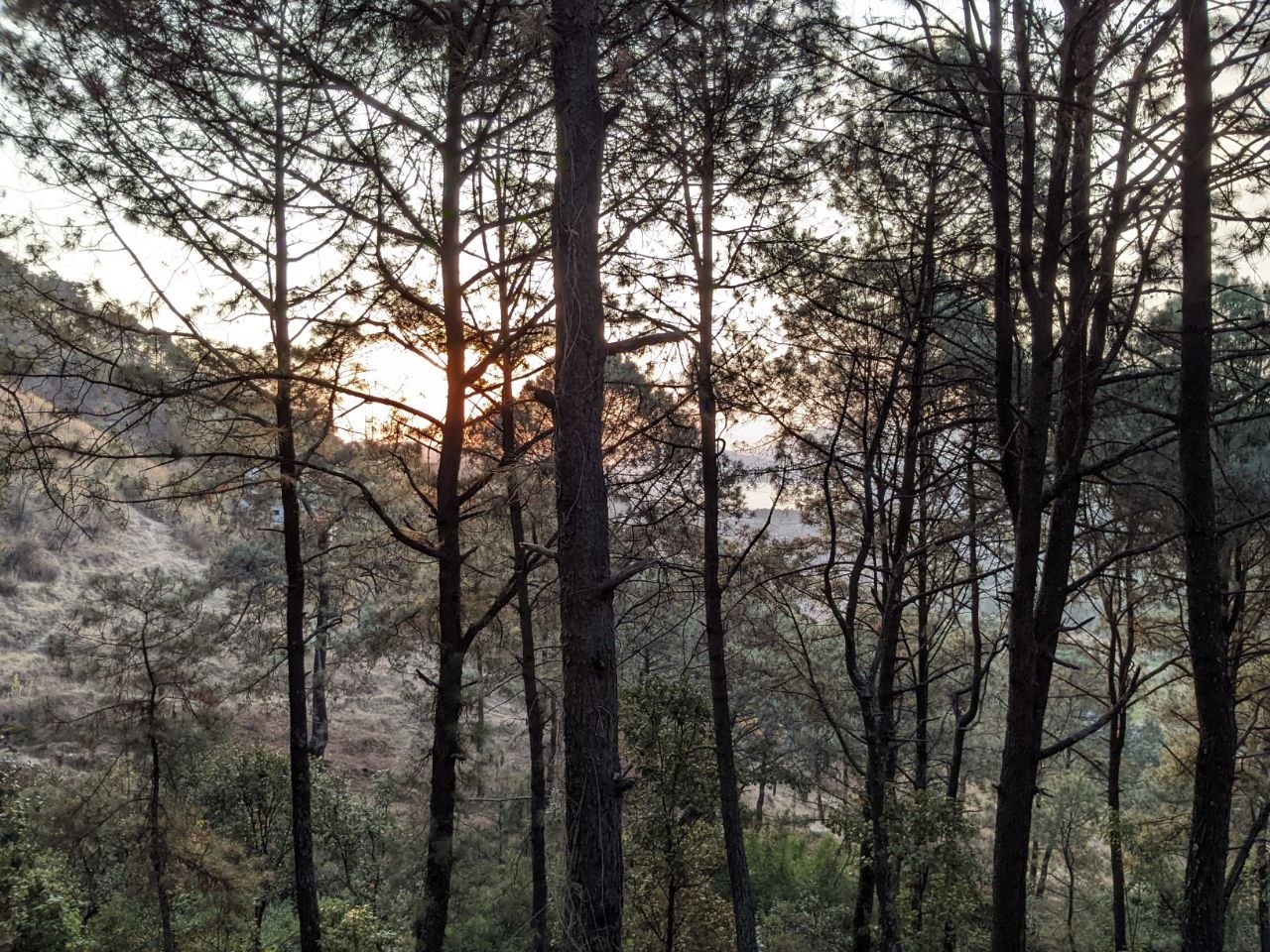
By the time I’ve driven down into Valle, maybe twenty minutes, I’m taking both off. Windows down. The air is noticeably warmer, the pine forest has given way to the colonial rooftops and the lake in the distance, and the town is waking up around me.
Then I drive back up. Windows open again. Somewhere between the lake level and my house at 2,450 meters, the temperature drops, the air changes, and by the time I pull in, I’m reaching for the jacket before I’ve even turned the engine off.
I tell that story because it explains something about Valle de Bravo real estate that no listing will tell you: this is not one market. It’s several, layered on top of each other within the same valley. The temperature difference between the lake and the forest above it can be eight or ten degrees on the same afternoon. That difference shapes how every home here is designed, how it feels to live in, and ultimately what kind of buyer it’s right for.
I’ve spent four years living in this valley, in different properties, at different elevations. This is what the Valle de Bravo real estate market actually looks like for a serious buyer in 2026.
Why Temperature and Elevation Shape Every Property Decision
Valle de Bravo sits at around 1,800 meters above sea level at the lake. My home is at 2,450 meters. That 650-meter difference produces two genuinely different living experiences and two genuinely different types of architecture.
Up at elevation, where I am now, the mornings are cold and crisp. Days warm up but never get hot. Nights are cool enough that you want a fire. During the rainy season, thick fog rolls in from the mountains and moves through the house, through the kitchen, down the hallways, settling into corners. It’s one of the most atmospheric things about living here and something you either love immediately or find takes time to appreciate.
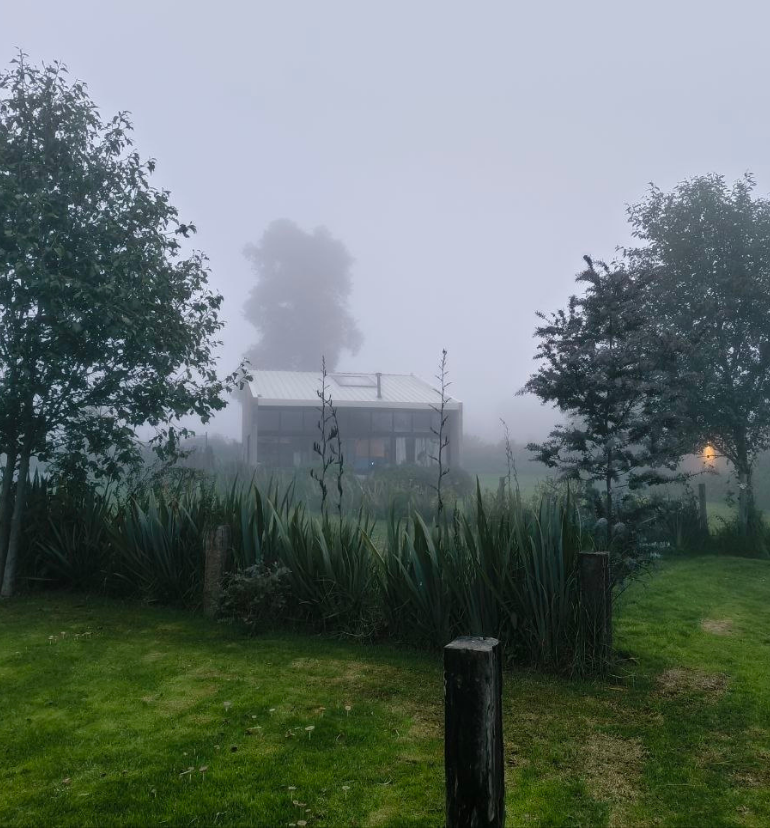
My home was built around this climate. A 4-meter sliding glass door in the kitchen opens the entire wall to the outside. During the dry and rainy seasons, it stays open all day. I’m inside and outside simultaneously without having to choose. The materials are modern and considered: designed around how you flow through the day, how the light moves, where the cold comes from at night. A home at this elevation needs to be engineered for the temperature range. The best ones are. You feel it immediately when you walk in.
Down near the lake at 1,800 meters it’s considerably warmer. I lived in the center of Valle for a period, overlooking the lake, and while mornings and evenings are cool but never cold, the midday heat is a different register entirely. The architecture reflects that. More open, more permeable, designed to catch the breeze rather than retain warmth. The sunsets from lake-level properties are extraordinary: that lower position gives you the full western sky over the water in a way that higher properties don’t always capture.
The key thing to understand is that Valle de Bravo real estate has so many microclimates that every home is genuinely different. The question isn’t just which neighborhood; it’s which elevation, which orientation, which relationship to the sun and the prevailing weather. A property that feels perfect in one season can feel wrong in another if the architect didn’t account for the full climate picture. The best homes here did. The ones that didn’t, you notice.
The Neighbourhoods: What Each One Actually Delivers
The Town Center and Hillside Above It
Properties in and immediately above the pueblo offer something most buyers don’t expect: dramatic lake views from a near-walking-distance-to-everything location. The colonial rooftops, the church tower, the lake spreading out below, from the right position on the hill above town, that view is as good as anything in Valle.
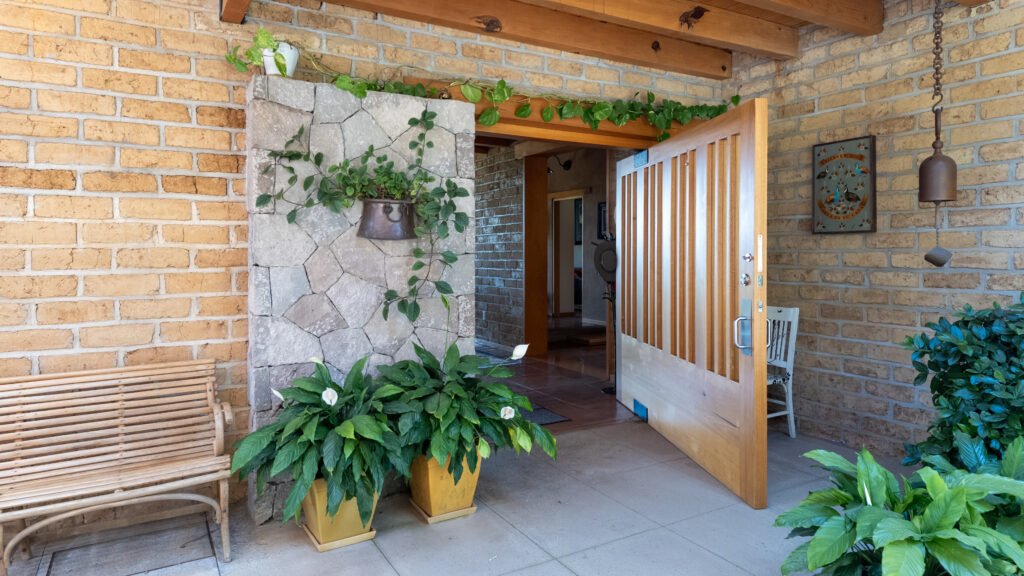
The architecture here tends toward the traditional and the renovated, with a warmer microclimate than the higher forest areas. For a buyer who wants to walk to dinner, be in the middle of the town’s energy on weekends, and still have a genuine view, this part of the Valle de Bravo real estate market is consistently underappreciated.
Lakefront
Lakefront is the most coveted and the least available segment of the Valle de Bravo market. Direct water access, the lake as your foreground, sunsets that photograph like paintings. The architecture of lakefront homes is designed for warmth and openness; these properties are built to live outdoors as much as possible, with the water as the organising principle of every space.
What a buyer needs to understand about lakefront is that supply is genuinely constrained or capped based on your budget. While many exist, for direct lake access, you’re looking well over 16,000,000 MXN pesos, and this would be on the lower end. If lakefront is what you’re looking for, you need someone with relationships in this market, not a search portal.
Avandaro: Social, Convenient, Forest Adjacent
Avandaro is where the international and expat community concentrates more than anywhere else in Valle. Restaurants, shops, and services are close, walkable in many cases. The forest is still present but the neighborhood has a social energy that the deeper forest properties don’t.
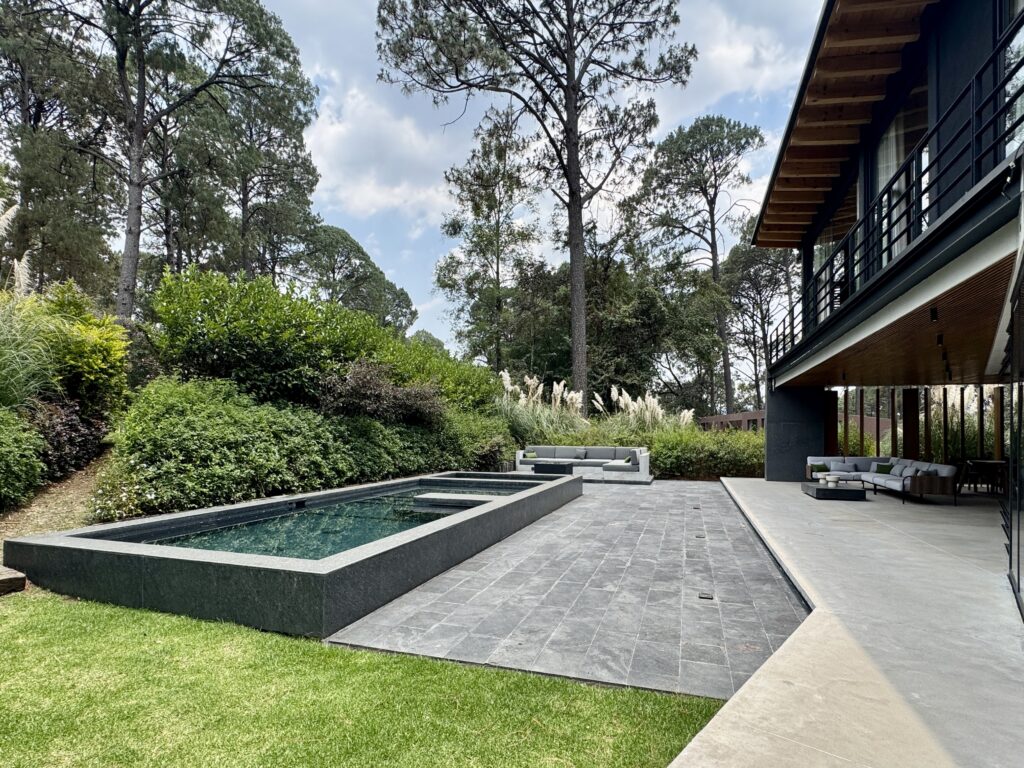
For a second home buyer who wants to arrive on a Friday evening and be immediately in the middle of things, dinner, people, the weekend atmosphere, Avandaro delivers that without requiring a car for every move. It’s also the most active short-term rental neighborhood in Valle, for buyers who want the property generating income when they’re not using it.
Deep Forest: Privacy, Architecture, New Construction
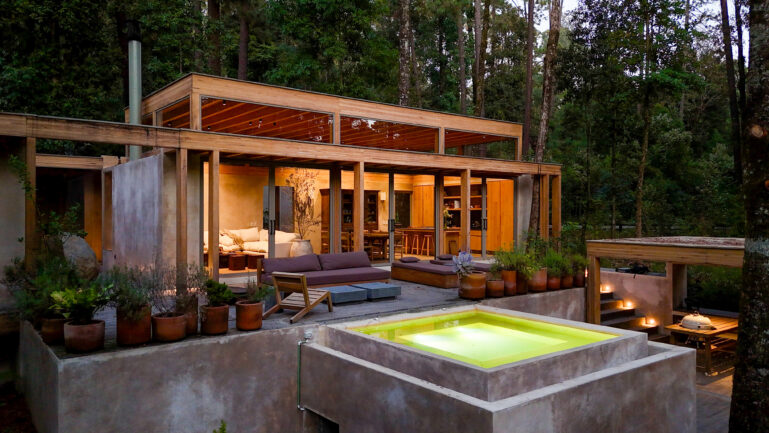
If I were buying a second home in Mexico today within this market, this is where I’d look. The deep forest neighborhoods are where the newest and most architecturally ambitious properties are being built. These are homes that fully commit to the indoor-outdoor philosophy: glass walls that retract completely, terraces that flow from living rooms without transition, the forest as the view from every room.
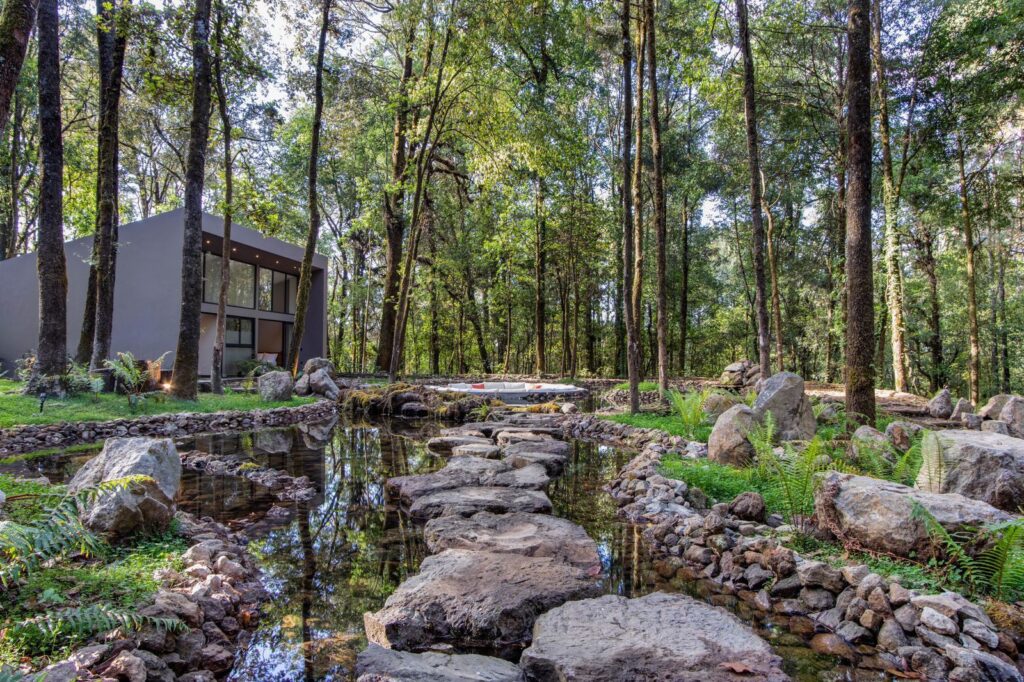
Privacy here is genuine. You can have neighbours and genuinely not know they exist. For a buyer whose vision of a second home in Mexico is a complete retreat, somewhere to arrive, close the gate, and be fully present, the forest delivers that in a way no other part of Valle does. The combination of new construction quality, serious architecture, and real privacy makes this segment, in my view, the most compelling in the current Valle de Bravo real estate market.
What the Market Looks Like by Price in 2026
The Valle de Bravo real estate market has three meaningful price tiers for a US buyer. Each delivers something genuinely different.
| Budget (USD) | What You Get | Best For |
| Under $500k | Quality varies by location. Custom designer homes exist in the $400-500k range in certain neighborhoods. Older properties may need updating. | Buyers who know the market or have local guidance. Land play: buy and build. |
| $500k to $1M | The sweet spot. Well-finished stunning homes in good neighborhoods, quality architecture, serious outdoor spaces. Not lakefront at this range but strong in Avandaro and forest neighborhoods. | Most serious second home buyers. Best quality-to-price ratio in the current market. |
| $1M to $3M+ | The top of the market. Lakefront, exceptional forest homes, the best new construction. Architecture that competes with anything globally at this lifestyle level. | Buyers who want the best of what Valle offers without compromise. |
The Full Financial Picture: What a Transaction Actually Costs
The purchase price is not the total cost. A buyer who doesn’t account for closing costs will be caught off guard.
In Valle de Bravo, budget an additional 4% to 9% on top of the agreed purchase price to cover the full cost of completing the transaction. This range covers notary fees, the acquisition tax (ISAI), legal fees for independent due diligence, the SRE permit required for foreign buyers, and the various administrative costs involved in registering the transfer at the Registro Publico de la Propiedad.
Where you land within that 4-9% range depends on the value of the property, the complexity of the transaction, and who you’re working with on the legal side. Budget toward the higher end of that range and treat anything under it as a pleasant surprise rather than an expectation.
Properties in Valle are priced in Mexican pesos. For a USD buyer, this creates a dynamic worth understanding. The exchange rate at the time of transaction determines your effective dollar cost. In a period of peso weakness against the dollar, a buyer’s purchasing power increases. In a period of peso strength, it decreases. This doesn’t change the fundamental case for the market, but it’s a real variable in the financial planning of any cross-currency transaction.
I’ve covered the tax implications of selling in more detail for US nationals: the ISR profit tax, the residency-based exemptions, and the currency trap that affects sellers who bought and sold in dollars but are taxed in pesos. If you’re thinking seriously about a purchase, that piece is worth reading before this conversation goes further.
How the Market Actually Works: And How Serious Buyers Find Properties
Online listings exist in Valle de Bravo and they are a legitimate starting point. Portals like Inmuebles24 and Lamudi have real inventory and are worth browsing to get a general sense of the market. The property I almost purchased was found through an online listing. So yes, search online. That part works.
What doesn’t work is assuming the listing is the whole story, or that the agent presenting it has your interests at heart.
I’ll tell you what happened to me directly. I found a piece of land I was seriously interested in through an online listing. The realtor seemed professional and responsive. We got to the offer stage and that’s when things shifted. When I started asking the questions any serious buyer should ask, elevation, title status, water connectivity, environmental clearances, the tone changed. Defensiveness. Vague answers. And then, when I cross-checked what I was being told against what my independently hired lawyer was finding, I caught the realtor lying. Not shading the truth. Lying. To get a sale that would have put me in a genuinely bad situation.
I dodged that because I had hired a lawyer before I needed one, not after. The lawyer was cross-checking everything the realtor told me in real time. That’s the step that saved the transaction from becoming a very expensive mistake.
The lesson is not to avoid online listings. The lesson is to approach the agent presenting any listing with appropriate scepticism, to ask every question you need answered, title, water rights, environmental status, elevation, connectivity, and to have independent legal counsel verifying the answers before you move to the offer stage. An agent who becomes defensive when you ask basic due diligence questions is telling you something important. Listen to it.
The realtors worth working with in Valle are the ones who welcome those questions, who have internal legal departments, who can answer the hard questions directly, and whose reputation in the local community is something they protect rather than trade away for a commission. Those people exist here. Getting a personal recommendation for one, from someone who has actually transacted in this market and come out the other side, is worth more than any search portal.
When good properties are priced correctly they move fast: weeks, sometimes less. A buyer who is serious needs to be ready to act: financing understood, legal counsel identified, and a clear sense of what they’re looking for before they need to decide. That preparation is the difference between buying the right thing and watching it go to someone else.
What Due Diligence Looks Like Here
Legal risks specific to Valle de Bravo real estate you need to be aware of: the Ejido land trap, the federal environmental permitting complications, and the water concession issues. These are real risks that have caught uninformed buyers across every price tier.
The short version for a second home buyer: hire independent legal counsel who is not connected to the seller, the agent, or the local network around the transaction. Ask them to pull the Folio Real, the property’s complete digital record at the public registry, and verify that the title is clean, the land is private property and not communal or Ejido land, and that there are no encumbrances or environmental orders against the plot.
Also verify the water concession. A property without a legal CONAGUA concession or a verified share in a properly titled local well is increasingly difficult to sell or develop as enforcement tightens. Here in Mexico, drilling your own well is a very complex process and is often declined for private properties. This is not a technicality; it is a material fact about the asset you’re buying.
The cost of proper independent due diligence is negligible relative to any purchase at this level. The cost of skipping it can be the entire investment.
The Investment Case: Why Now Matters
Valle de Bravo real estate has shown consistent resilience through economic cycles that affected other markets. The structural reasons are not complicated: supply of quality titled land within a federal protected natural area is finite and doesn’t grow, demand from Mexico City’s professional class has been sustained for decades, and new international buyer interest is growing from a low base.
The Toluca-Zihuatanejo highway, currently 33% complete and projected to finish in December 2029, adds a specific future catalyst to this picture. When that highway opens, Valle will be within four hours of the Pacific coast. The combination of Mexico City, mountains, and beach within a single radius will be a different conversation for this market than the one happening today, which will create a lifestyle triangle that nowhere else in the country has. The buyers who are here before that open are buying at a price that reflects the current access profile, not the future one.
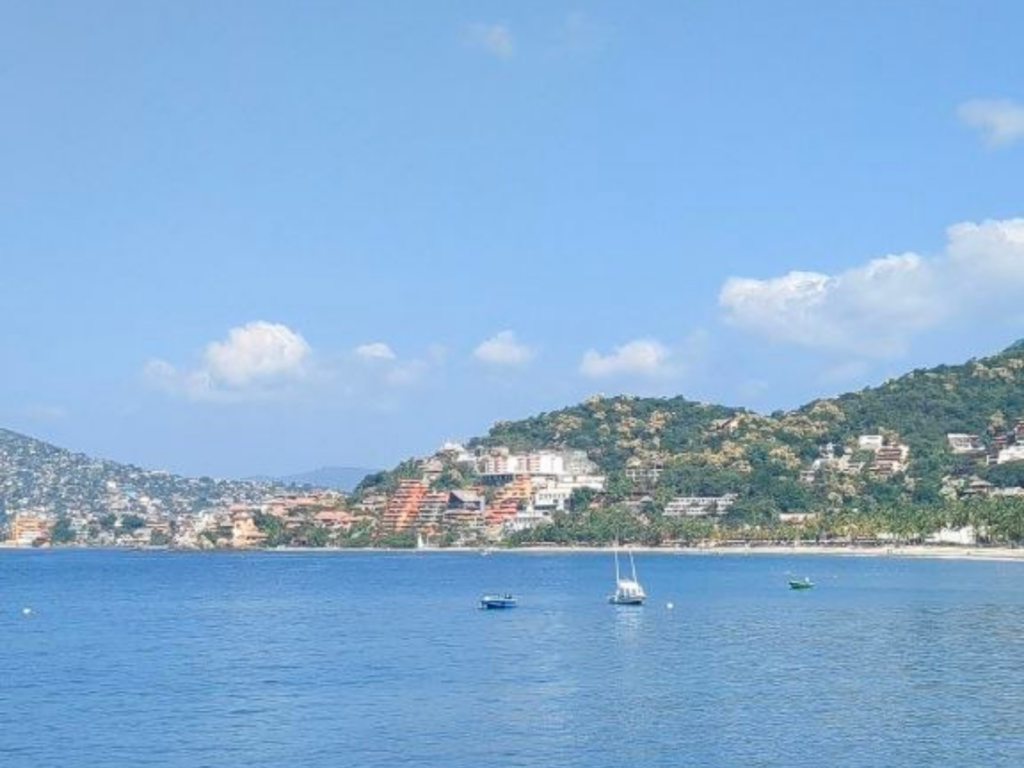
New construction is happening but the best land is increasingly hard to find. Titled forest plots with clean environmental status, legal water rights, and genuinely dramatic views are not abundant. They appear, they move, and they don’t come back. The inventory picture tightens as the market matures.
None of this is a reason to rush or to buy the wrong thing. It is a reason to engage with this market seriously and with the right guidance, rather than treating it as something to look at eventually when you have more time.
My Honest Summary
Valle de Bravo real estate is one of the most varied and genuinely impressive markets for buying a second home in Mexico that I’ve encountered. Not because everything here is extraordinary; it isn’t. But because the range of what exists, from lake-level colonial properties with sunset views to deep forest estates designed around fog and silence, means that almost any vision of what a second home should feel like can be found or built here.
The market rewards buyers who understand it. The neighborhoods are genuinely different from each other. The elevation and temperature picture shapes every property in ways that matter to daily life. The best properties move through relationships rather than listings. And the due diligence required to buy safely here is specific and non-negotiable.
I’m here full time, embedded in this community, and in the process of buying land myself. If you want to understand what’s actually available, what the process looks like for a foreign buyer at your level, and where the right opportunities are right now, that conversation is worth having.
That’s what I’m here for.
High-end construction in Valle de Bravo typically ranges from 20,000 to 35,000 MXN per square meter, depending on the architecture, finishes, and complexity of the build. Most serious custom homes land between $500,000 and $3M USD, including land and construction.
For buyers looking for privacy, nature, and a slower lifestyle within driving distance of Mexico City, Valle de Bravo is one of the strongest second-home markets in Mexico. It attracts both weekend homeowners and an increasing number of full-time residents.
Yes. Foreigners can legally purchase property in Valle de Bravo, and because it is outside Mexico’s restricted coastal zone, the process is simpler than buying beachfront property. Proper legal due diligence is still essential before purchasing any land.
The best architects in Valle design around the landscape, natural light, weather, and how owners actually live day to day. Indoor-outdoor living, forest integration, and calm, functional spaces are central to modern Mexican architecture in the region.