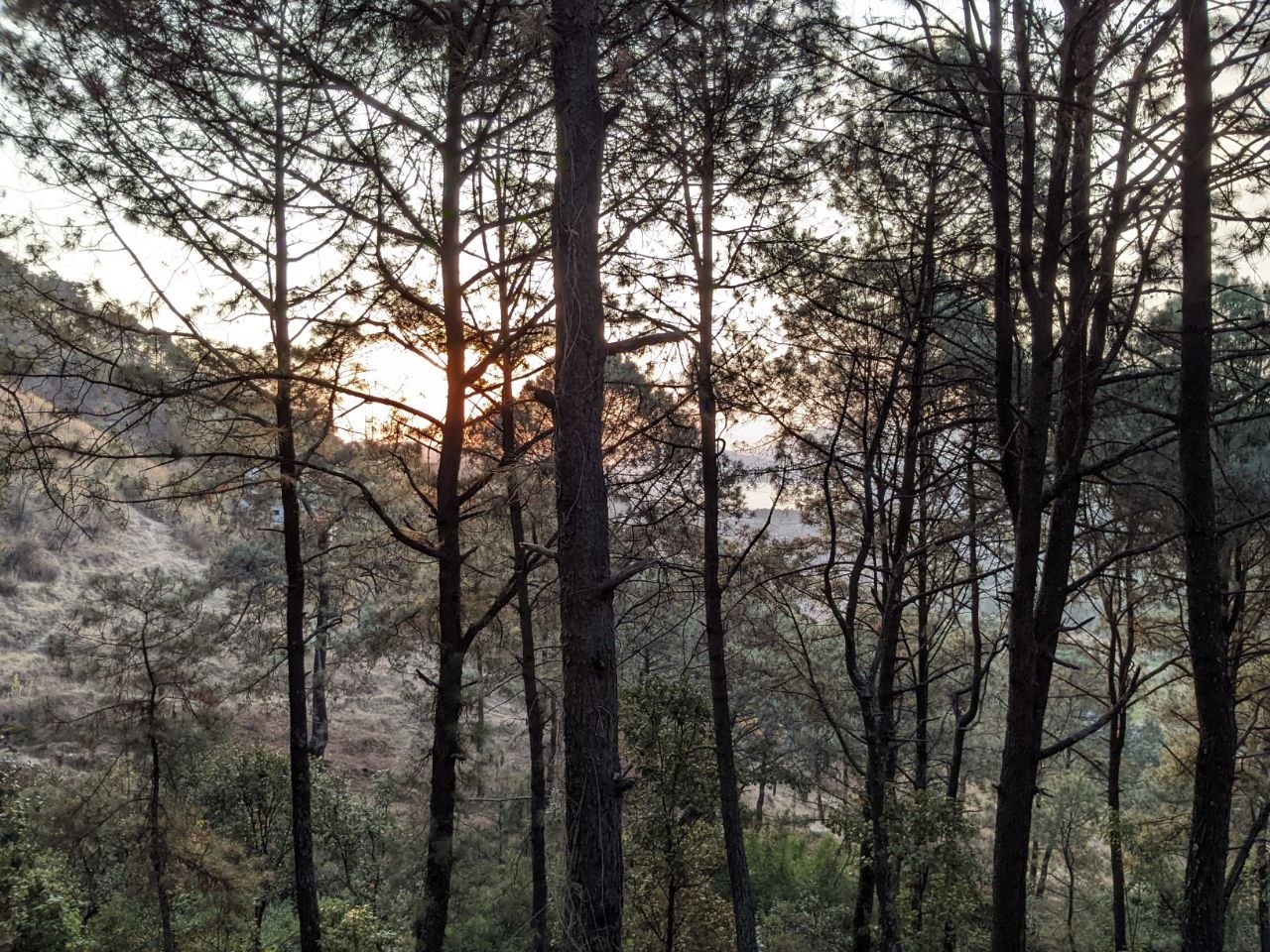

The first time I visited a ranch near Valle de Bravo I wasn’t sure what I was expecting. Something rustic, maybe. Functional. The kind of working property that trades beauty for utility.
What I found was something entirely different. Pine forest on one side, open flat meadow on the other, a natural water source running through the land, mountains framing the whole picture. A main house with the kind of architecture you’d expect in a design magazine. A greenhouse that was producing seriously. An outdoor-indoor gym completely in the forest. Views that made you stop what you were saying mid-sentence.
All of it on one property. All of it within two and a half hours of one of the largest cities in the world.
That visit changed how I thought about what a ranch in Mexico could actually be. And it’s the picture I’d want any serious buyer to have in their mind before they start looking at ranches for sale in Mexico.
What a Ranch in Mexico Actually Means: Especially Near Valle de Bravo
If you’re coming to this with a US or Canada frame of reference, the first thing worth understanding is that the definition of a ranch in Mexico is different from what you might be imagining.
A ranch in Texas or Alberta typically means hundreds of acres of working land: cattle, crops, serious agricultural infrastructure. That model exists in Mexico too, particularly in the northern states. But the ranches in and around Valle de Bravo operate on a different philosophy entirely.
Here, a ranch in Mexico is better understood as large private land with a lifestyle built around it. The land is the main event. Size matters less than what the land looks and feels like: the topography, the water, the views, the mix of forest and open ground. Some properties are genuinely working, producing crops, maintaining horses, running small agricultural operations. Others are primarily lifestyle properties where the farming element is present but secondary to the experience of living on a large, private, self-contained piece of land.
Most of the better ranches near Valle sit somewhere between those two things. The lifestyle of a luxury home. The grounding of a farm. Neither fully one nor the other, and that combination, for the right buyer, is exactly what makes them compelling.
What the Land Looks Like
The ranches I’ve visited near Valle de Bravo share a quality that I find consistently difficult to describe until you’ve experienced it: the land contains multitudes.
On a single property you might have pine forest thick enough to feel completely secluded, open flat meadow where horses graze, a natural stream or water source running through the land, and dramatic mountain views from the higher points of the property. The variation within a single boundary, the way the landscape shifts from dense forest to open ground to elevated viewpoints within walking distance, creates an environment that feels much larger than its measured size.
This is what the State of Mexico’s mountain topography produces. The land doesn’t sit flat and uniform the way agricultural land in other regions does. It rolls and climbs and opens up. A well-positioned ranch here has a different character at different points on the property, a quality that makes you want to explore it rather than just inhabit it.
The best ranches also have water on the land. A natural stream, a spring, a well with a proper concession. In a region that has faced drought pressure in recent years, a property with a verified, legal water source is not just more livable; it is fundamentally more valuable and more secure as an asset.
The Homes: What’s Being Built on Ranch Land Here
The architecture on the better ranches near Valle is not an afterthought. It is one of the most impressive aspects of what exists in this market.
The main houses on serious ranch properties here are custom-designed around the land, oriented toward the best views, built with materials that belong to the landscape, designed for the specific microclimate of that elevation and that position. Stone, wood used deliberately, large glazed openings that frame the mountains the way a painting frames a subject.
Beyond the main house, the better properties have supporting infrastructure that reflects how seriously the owners have thought about the life they want to live here. Greenhouses that are both functional and beautifully constructed, producing year-round in a climate that rewards serious growing. Gym facilities that are genuinely impressive rather than an afterthought. Staff quarters for the people who look after the land. Stables, where horses are part of the picture.
What struck me visiting these properties is their completeness. You arrive and realize that the owner has thought about every aspect of what life on this land should look like and built toward it with real care and real resources. These are not weekend cabins on large plots. They are fully realized private worlds. For buyers who are thinking about building on ranch land rather than purchasing an existing structure, my guide to the cost of building a luxury home in Valle de Bravo covers what a serious build at this level actually costs; the materials, the labour, and what to budget realistically from the ground up.
The Agricultural Reality: What Ranch Land Can Actually Produce
For buyers who want ranch land for sale in Mexico to be more than a lifestyle property, who want the land to produce something, to generate income, to function as a working asset as well as a beautiful place to live, the Valle de Bravo region offers genuinely viable options.
Avocados do very well in this climate and elevation range. The State of Mexico sits within the broader avocado-producing heartland of central Mexico, and the combination of altitude, rainfall, and temperature in this region produces fruit that is commercially competitive. A serious avocado operation on ranch land here is not a hobby farm; it is a real agricultural business.
Mushrooms are another crop that thrives here. The forest environment, the moisture levels, and the temperature profile of the mountain climate create ideal conditions for cultivation. Several producers in the region have built significant operations around specialty mushrooms.
Blackberries are a third option that performs exceptionally well in this climate. The berry-growing culture in the broader State of Mexico region is established and the export market for Mexican blackberries is real and growing. A ranch property with the right land profile can support serious berry production alongside the residential use of the property.
The State of Mexico is also one of the largest flower-producing regions in the country: cut flowers, ornamentals, and specialty botanical production. For a buyer interested in agricultural income, this is a sector with real commercial depth in the region.
None of this requires the buyer to become a farmer. A well-run ranch in Mexico employs local staff who manage the agricultural side under the owner’s direction. The model that works for most serious buyers here is ownership and oversight, not day-to-day physical labor.
The Equestrian Culture
Horses are woven into the fabric of ranch life near Valle de Bravo in a way that feels natural rather than aspirational.
Equestrian culture here is genuine and long-established. The trails through the surrounding mountains and forests are ridden regularly by people who live on these properties, not as a tourist activity but as a normal part of how they move through the week. Horse breeding is part of the economy of the region. Stables on ranch properties are working facilities, not decorative ones.
For a buyer who rides, or who has always wanted the space to keep horses properly, a ranch near Valle offers something that is very difficult to find near a major city anywhere in the world: serious equestrian infrastructure, genuine riding country, and a community where horses are a normal part of life rather than an expensive eccentricity.
What Buyers Need to Understand Before Purchasing Ranch Land Here
The legal and practical considerations for buying ranch land for sale in Mexico near Valle de Bravo are specific and worth understanding clearly before any property conversation gets serious.
Foreign buyers can own ranch land directly in this region. Valle de Bravo is outside Mexico’s Restricted Zone, which means US nationals and other foreign buyers can hold direct title to land without a trust structure. The same clean, direct ownership that applies to residential property here applies to ranch land. That is a meaningful advantage over coastal markets.
The legal risks, however, are the same as any rural property in Mexico, and in some ways more significant given the scale of land involved. Ejido land is a real risk in rural areas. A property offered at a price that seems too compelling for its size and location should prompt immediate questions about the land registry. If the title traces to the Registro Agrario Nacional rather than the Registro Publico de la Propiedad, it is communal land, not something a foreign buyer can own safely regardless of what any intermediary tells you.
Water rights on ranch land require specific verification. A natural stream running through a property does not automatically convey legal rights to that water. A well on the land does not automatically have a legal concession. In Mexico, all water belongs to the nation. Verify the CONAGUA concession before you make any offer on rural land with water features, and price any property without a verified concession accordingly.
Ranch land near Valle can border federal protected natural area boundaries. This affects what you can clear, build, or develop on certain parts of the property. An independent environmental assessment of any rural land in this region, not just a review of the title but a review of the specific CONANP and SEMARNAT status of the plot, is not optional for a serious buyer.
Road access is a practical consideration that affects both daily life and long-term value. The more remote ranch properties near Valle require, or are highly recommended to have, a 4×4 vehicle and in some cases significant road maintenance. Factor that into both the lifestyle calculus and the operating cost picture.
Finally, staff. A ranch in Mexico without people looking after it deteriorates faster than most buyers expect. Fences, irrigation, crops, animals, structures: all of it requires consistent attention. Budgeting for reliable local staff from day one is not an optional extra. It is the operating cost that makes everything else work. That being said, I have met several couples who manage without staff due to their ranch being on the smaller side, but it really comes down to how involved you want to be with your land.
What to Expect on Price
Ranch properties in the Valle de Bravo region with existing structures and working infrastructure typically trade in the $500,000 to $1.5 million USD range. Within that range, what you get varies significantly based on the size of the land, the quality of the main house, the state of the agricultural infrastructure, the water situation, and the road access.
At the lower end of that range you are typically looking at land with basic existing structures: a functional property that reflects decades of use rather than a recent serious investment. At the upper end you find properties where the owner has put real thought and real money into both the agricultural operation and the residential experience. The difference in quality between the two ends of that range is substantial.
Land pricing in the surrounding rural areas averages around 2,000 MXN per square meter for titled private land, though this varies considerably by location, access, and water status. Budget an additional 4-9% on top of the purchase price for closing costs, which include notary fees, acquisition tax, legal due diligence, and registration.
As with the broader Valle de Bravo real estate market, the best ranch properties move through relationships and recommendations rather than public listings alone. A property that genuinely has everything, a forest, flat land, water, views, quality architecture, viable agricultural infrastructure, is rare but with the right connections you can find your dream ranch.
Why Valle de Bravo Specifically
There are ranches for sale in Mexico across the country. The question worth asking is why Valle de Bravo specifically deserves serious attention from a buyer who could look anywhere.
The answer comes back to the same thing that makes this valley compelling for every other type of property: the combination of what it offers is genuinely rare.
Two and a half hours from Mexico City. Mountain climate at elevation. A community of serious, interesting people who chose this place deliberately. A town with genuine infrastructure: schools, restaurants, decent medical care, services, close enough to matter. The Toluca-Zihuatanejo highway coming by 2029 that will add Pacific coast access to the picture. And land that, in the right location, contains forest, flat ground, water, mountain views, and the conditions to produce avocados, mushrooms, blackberries, or flowers commercially.
A ranch near Valle de Bravo is not a retreat from a productive life. It is a different version of one, where the mornings start on horseback through pine forest, the land around you is working and alive, and the city is close enough to reach when you need it and far enough away to forget when you don’t.
That combination, at this price point, is not something you find easily anywhere else in Mexico.
If you’re seriously considering ranch land for sale in Mexico and want to understand what’s actually available near Valle de Bravo, the properties, the process, and what the right purchase looks like for your specific goals, that’s a conversation worth having.
That’s what I’m here for.
Expect to pay somewhere between $500,000 and $1.5 million USD for a property with a house and working infrastructure already in place. The gap between the two ends of that range is significant; what you’re really paying for is the quality of the build and how seriously the agricultural side has been developed, and the plot size. On top of the agreed price, set aside roughly 4 to 9% to cover taxes, notary fees, and legal costs at closing.
Unlike coastal markets where a bank trust is required, Valle de Bravo’s location outside the Restricted Zone means international buyers can purchase ranch land under their own name with a standard deed. What matters more than the ownership structure here is the due diligence: verifying that the land is privately titled, that water rights are legally conceded, and that the plot has been assessed for federal environmental restrictions.
The altitude and climate of this part of central Mexico create genuinely productive growing conditions. Avocados, blackberries, speciality mushrooms, and cut flowers are all commercially active in the region, not as hobby operations but as real agricultural businesses.