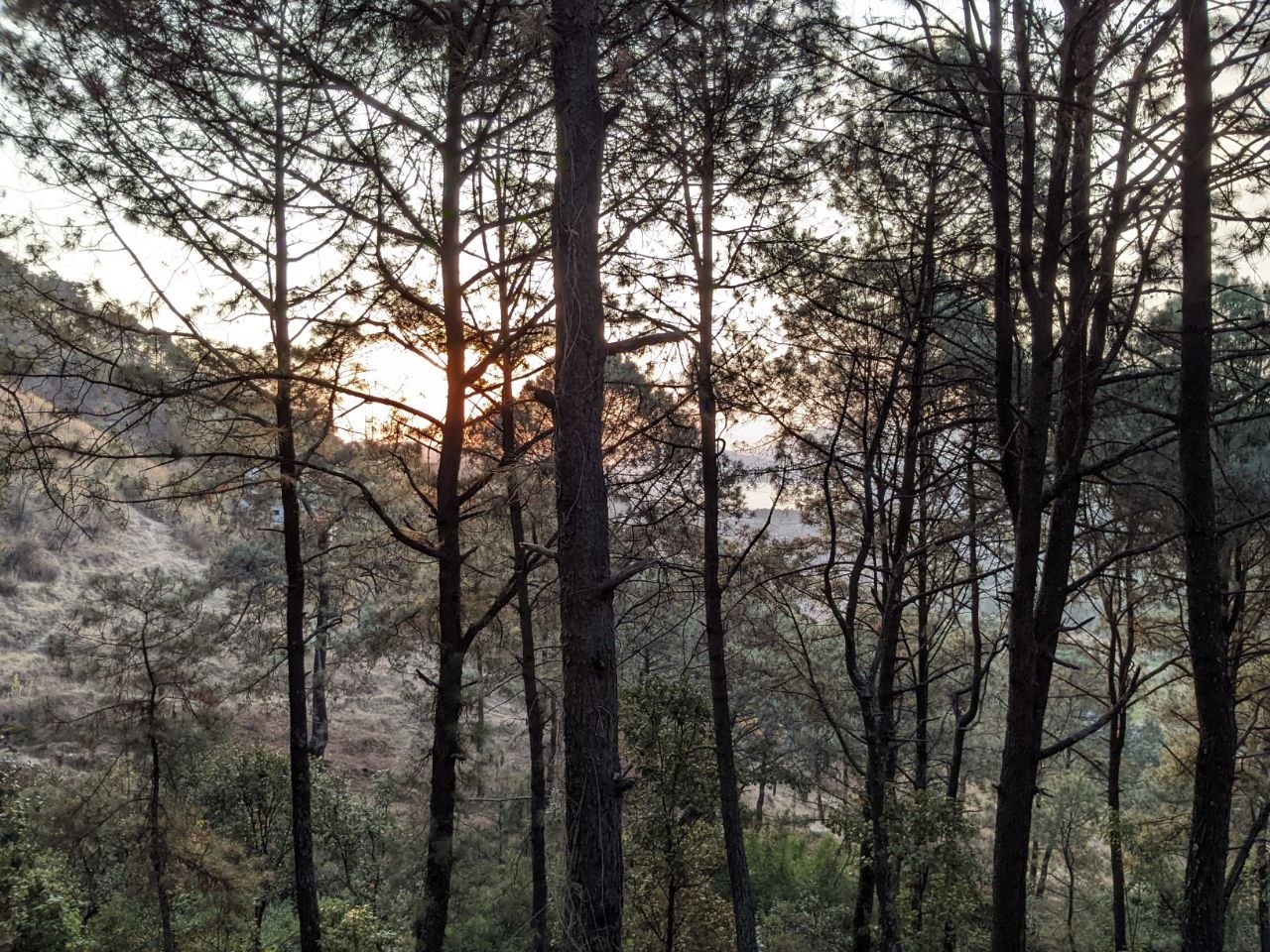

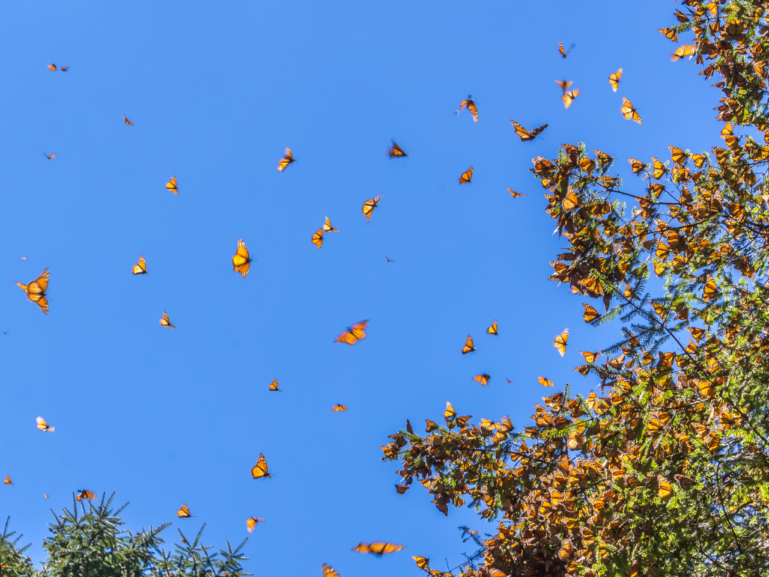
I wasn’t exactly sure what to expect.
It was a cool, crisp morning in early 2022, and a close friends visiting from Mazatlán and I drove out toward Temascaltepec, the municipality bordering Valle de Bravo. We stopped for atole and tamales on the way. That was the right call. Once you’re on that mountain, there are no breaks.
The monarch butterfly migration in Mexico is one of those things that sounds almost mythological until you actually go. Millions of butterflies completing a journey from Canada to the forests of central Mexico each year, clustering on the same trees in the same sanctuaries, generation after generation. The monarch butterflies in Mexico have been doing this long before anyone was counting them. The scale of it sits somewhere between biology and something you don’t have a word for.
A friend didn’t make it to the top. She’s from Mazatlán: sea level, warm all year. The elevation hit her quickly. Dizziness, nausea. She turned back before we reached the sanctuary. The rest of us kept going. That detail matters for later.
This Isn’t Actually Valle de Bravo
Here’s something you won’t find in most guides: the sanctuary isn’t in Valle de Bravo. It’s in Temascaltepec, the neighboring municipality, and the people who live there are genuinely frustrated that Valle gets the credit.
This isn’t a minor geographical footnote. Search “monarch butterfly Valle de Bravo” and you’ll find tour operators, weekend trip recommendations, and travel content all pointing to Valle de Bravo, because Valle has the infrastructure, the name recognition, and the tourism economy to capitalize on it. Temascaltepec has the butterflies.
The community there has maintained that sanctuary for generations. They manage access, protect the forest, and run the horses that carry visitors up and down the mountain. That work supports families in the town, creating jobs for the people who guide and walk the horses along the trail.
The horse ride costs 350 pesos, and that fee covers both the journey up and the careful walk back down with a guide leading the horse. It’s part of how the community sustains itself while preserving the sanctuary.
Tipping isn’t required, but it’s always appreciated. The butterflies bring an additional source of income to the people of the town, and small gestures can go a long way for those working along the trail.
They absorb none of the commercial upside that the monarch butterfly Valle de Bravo association generates for the town next door. The pride in Temascaltepec is real. So is the frustration.
Living near Valle means you hear both sides of this. It’s worth understanding before you go, if only so you appreciate what you’re visiting and who actually made it possible.
Getting Up the Mountain
The sanctuary sits at around 3,200 meters elevation. That’s not background information. It’s the defining fact of the experience.
You have two options: hike or take a horse. In reasonable shape, the hike takes 30 to 40 minutes. If you’re stopping at the rest points along the way, closer to 90 minutes. The horse option brings you to the designated silent zone, where you dismount and cover the final stretch on foot. From that point on, you whisper.
That last section matters more than you’d expect. The quiet builds before you arrive. By the time you reach the butterflies, something has already shifted. You arrive calmer than you started.
If you’re coming from a lower elevation, spend at least a week at a higher altitude before making this trip. Your body needs time to adjust. My friend from Mazatlán skipped that step and paid for it. There’s no shame in turning around, but avoiding the situation entirely is easier on everyone.
What You’ll Find at the Top
When I reached the observation area in 2022, I stood still for longer than I expected to.
Thousands of monarch butterflies, dense orange clusters on the branches above me, shifting slowly in the cool air. Some floating down. Others lifting when a break in the clouds let the sunlight through.
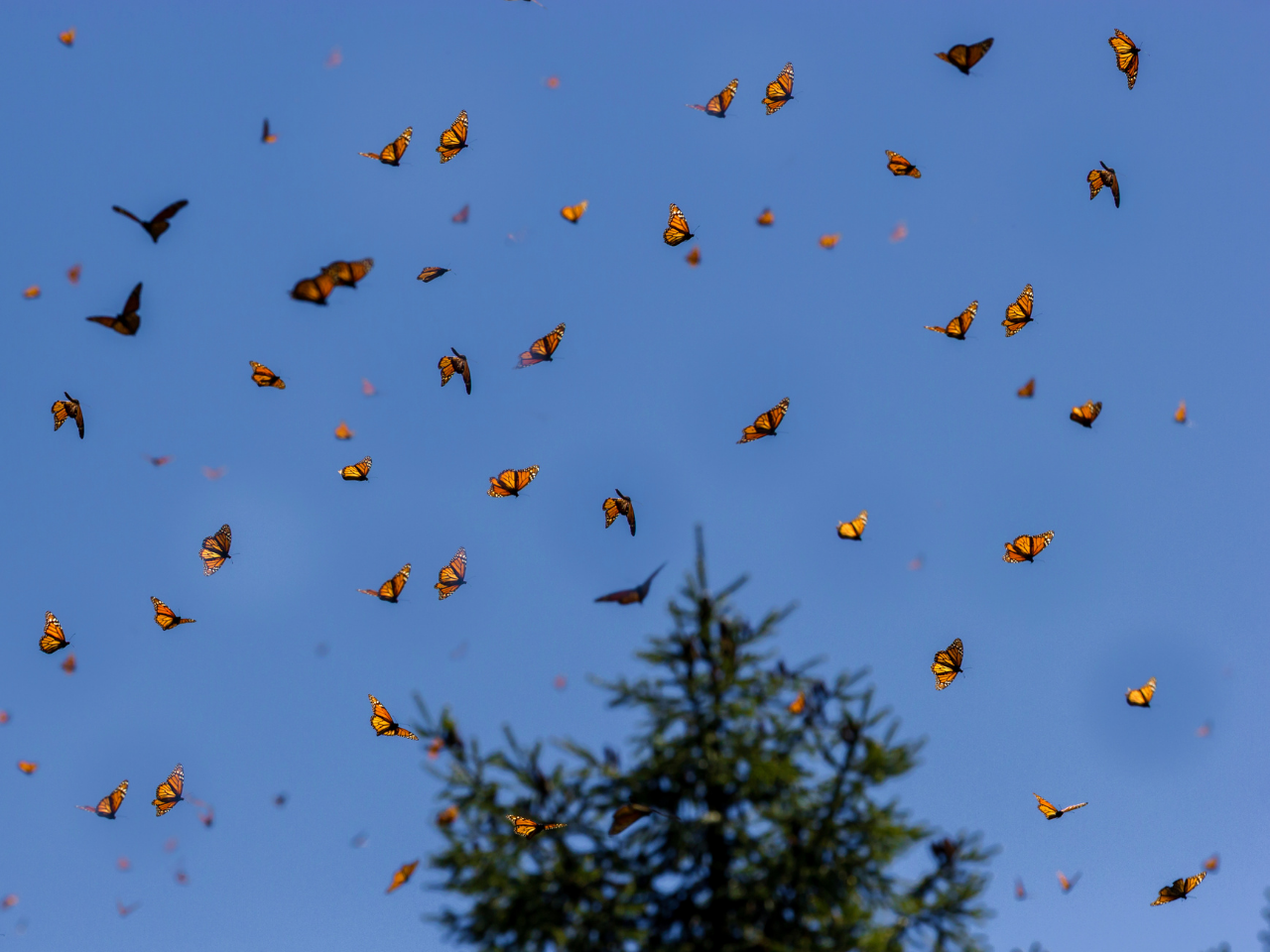
The monarch butterflies in Mexico complete one of the longest insect migrations on earth: from Canada, across the United States, to these specific forests in the mountains of central Mexico. Every year. They don’t learn the route. They inherit it across generations that never overlap. Standing underneath them, that fact lands differently than reading it.
Honestly, super impressive when you consider what they came from. The silent zone when you reach the top earns its name. You respect it without being asked twice.
2026 Return: What the Monarch Butterfly Migration in Mexico Looks Like Now
I went back in early 2026 and it was noticeably different.
The winter had been colder than usual. There had been rain during stretches when the sanctuary typically stays dry. And many of the butterflies were dying. Not fewer than before. Dying. On the lower branches. On the ground.
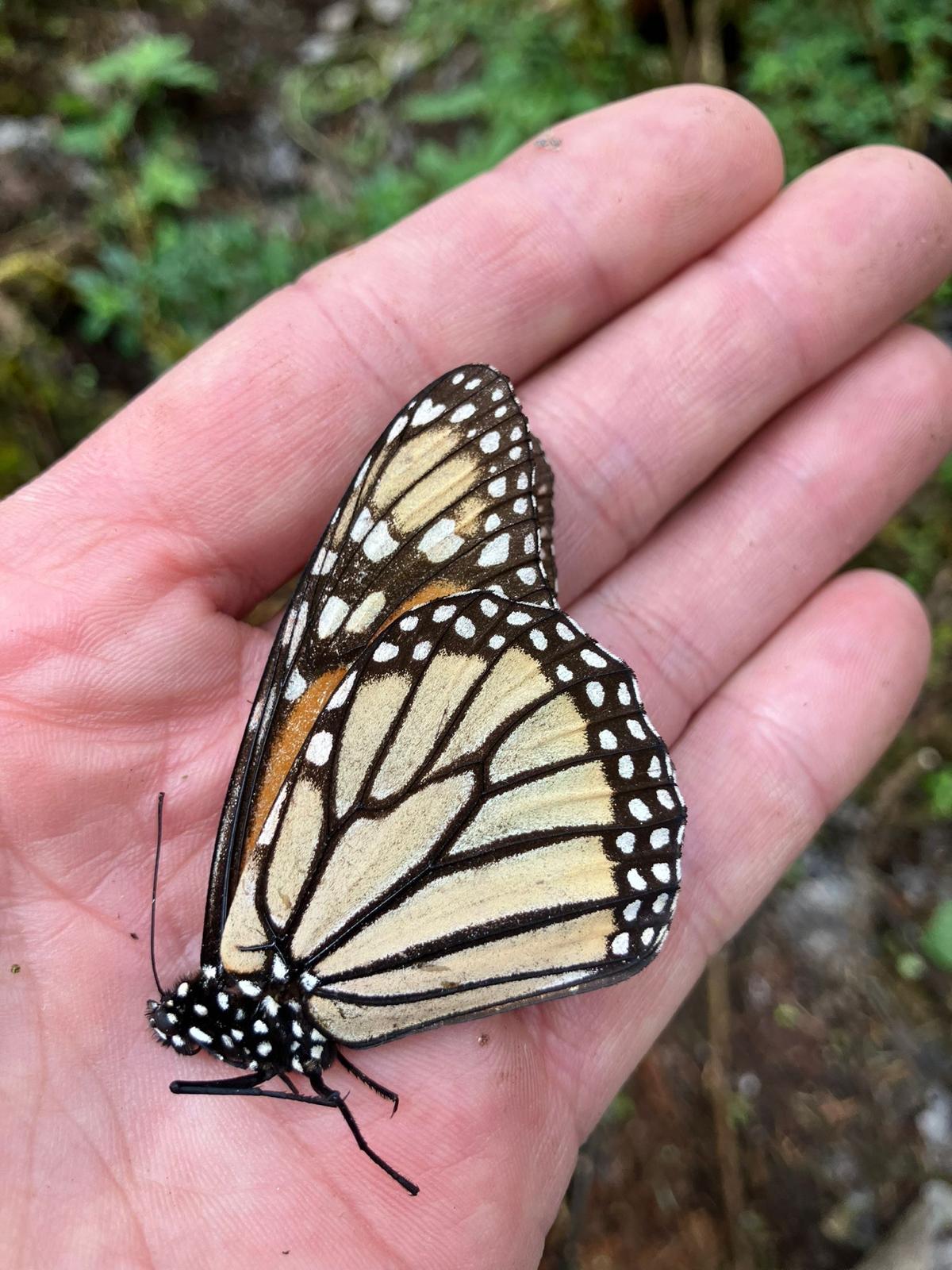
An old man who runs part of the sanctuary told me directly: the temperature shifts and erratic rainfall are changing things. The cycles the monarch butterflies in Mexico have followed for thousands of years are being interrupted by conditions they didn’t evolve for. He said it plainly, without drama, the way someone who has watched something he loves slowly change speaks about it.
He was born and raised in Temascaltepec. Has worked at that sanctuary since he was a child. Knows the lifecycle of these butterflies in detail that would take most researchers years to accumulate. And he carried it with a particular kind of pride: not pride in having built something, but pride in still protecting it. In still being there. In knowing more about these butterflies than anyone who would ever visit.
The place was still peaceful. Still beautiful in the way that only very quiet, very alive places manage to be. But the fragility of it was visible in a way it hadn’t been in 2022. That conversation with the old man stayed with me longer than the butterflies did. When you live here, you carry it into the next season.
Living With the Monarch Butterfly Migration
Living near Valle de Bravo means the monarch butterfly migration doesn’t feel like a tourist event. It becomes a season.
Around the time the butterflies arrive each year, the air shifts. Mornings get crisper. People light fireplaces earlier. In the garden, you start to notice monarchs alongside other species: hummingbirds working the flowers, bumblebees on the same patches, the whole yard suddenly busy in a way it wasn’t the week before. Christmas music, fireplaces, forest walks that feel like they belong to a different planet than the one you came from.
This is one of the rhythms that doesn’t appear in property listings or weekend travel guides. The seasonal texture. The way the natural world around you has its own calendar, and your life gradually starts to orbit it. The first year it’s beautiful. The second year you understand the timing. By the third or fourth year, it’s simply part of how the year moves.
The monarch butterfly migration in Mexico is the most visible expression of this, but it’s not separate from the place. It’s the place. And it’s the kind of thing that, without living here full-time, you would never fully appreciate. It’s also the kind of detail that tends to get missed when people start comparing where to live in Mexico.
If You’re Going
Temascaltepec is about 45 minutes by car from the center of Valle de Bravo. A few things worth knowing before you make the drive:
· Go on a weekday if you can. Weekend crowds change the experience considerably and you won’t get the quiet.
· Aim to arrive at 9am. You want the morning light, the cooler temperatures, and to be off the mountain before midday.
· Aim to arrive at 9am. You want the morning light, the cooler temperatures, and to be off the mountain before midday.
· Bring two or three layers. Elevation shifts temperature quickly and you’ll be standing still once you get to the top.
· Bring cash. No cell service, no ATMs. You’ll need it for the entrance ticket and the horse ride if you choose that option.
· At the base, there are stalls with hot drinks, snacks, and some local goods. Also cash only.
· Budget two to four hours total, depending on whether you hike or ride.
It’s the kind of place that earns a visit every couple of years rather than every season. Not because it loses its appeal. Because the interval gives it weight. Go with a small group of close friends. Time it right and the entire Valle de Bravo experience around that period is one of the best of the year.
Several sanctuaries across central Mexico host the migration, mainly in the State of Mexico and Michoacán. The closest access from Valle de Bravo is near Temascaltepec.
They typically arrive between late November and early December and stay through February. The exact timing and activity depend on temperature and weather conditions. The end of December or early January tends to be the best time to visit.
The main challenge is the altitude rather than the distance. Most people can manage it with a slower pace, and there are options like horses for the ascent.