
The search query is simple. The decision behind it isn’t.
When someone searches “buying land in Mexico,” they could be in one of a dozen different places at once: a retiree weighing coastal lots against mountain parcels, an investor looking at agricultural land near a growing city, an expat who has spent real time in a Mexican town and wants to plant something permanent, a couple who visited a valley two years ago and haven’t stopped thinking about it. The keyword is the same. The actual question varies enormously.
What doesn’t vary is the need for a clear framework before any property conversation gets serious. Buying land in Mexico is more layered than buying a house. The variables are different. The risks are specific to the type of land, the location, and what you intend to do with it. And when you get it right, the upside is genuinely significant, private land of a scale and quality that is increasingly difficult to find in comparable markets at anything like these prices.
This is how I think about it.
The First Question Isn’t “Where” It’s “What Kind”
Before location, before budget, before anything else: what kind of land are you actually looking for? In Mexico, the answer shapes everything that follows; the ownership structure, the legal risks, the path to development, and the professionals you need working alongside you.
There are broadly four categories that buyers in this market tend to be considering.
Urban and semi-urban lots sit within towns, villages, or established developments, typically with existing services; electricity, water, paved road access. These are the most straightforward purchases: the title situation is usually cleanest, services are in place, and the path to construction is more predictable. The trade-off is scale and landscape. Urban lots are constrained, and the kind of life they enable is correspondingly more conventional.
Rural and agricultural land covers a wide range of larger parcels outside town boundaries, often with farming history and sometimes active agricultural use. A rural plot in Mexico can be anything from a couple of hectares to thirty or more. The title situation here is where careful attention is essential: private titled land, ejido communal land, and combinations of both exist in the same landscape, physically invisible from one another, legally miles apart. For a detailed look at what rural land looks like at its best in central Mexico; the topography, the architecture, and what a well-positioned property in the highlands can actually produce, I wrote a blog on ranches for sale in Mexico that is worth reading alongside this one.
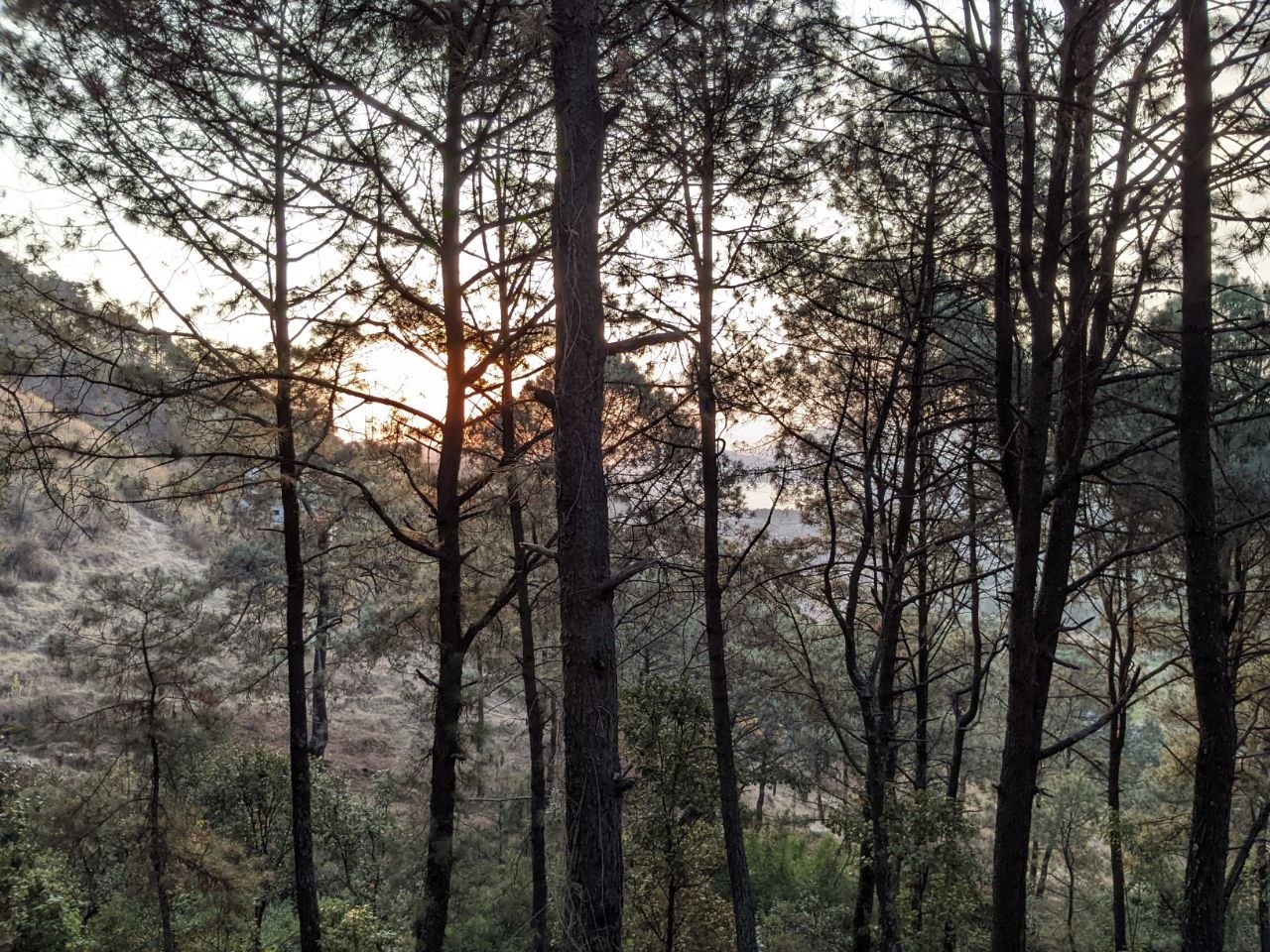
Forest and mountain land is the category that attracts buyers who want landscape; views, trees, water, elevation, privacy. It tends to sit within or adjacent to federal protected natural areas, which adds a layer of regulatory complexity that is specific to each individual plot. Building on forest land in Mexico requires not just municipal permits but federal environmental clearances. The properties in this category that have been developed thoughtfully, with the right title, the right water situation, and the right environmental status are genuinely exceptional assets. The ones that haven’t been verified properly are the market’s most expensive mistakes.
Coastal land needs almost no introduction in terms of lifestyle appeal, but it does need an important legal note: land within 50 kilometers of any Mexican coastline sits inside the Restricted Zone, where foreigners cannot hold direct title. Buying in Cabo, Puerto Vallarta, Tulum, or anywhere along the coasts requires either a fideicomiso, a bank trust that holds the property on your behalf, or a Mexican corporation structure. That is not a dealbreaker, but it is an added cost and layer of complexity, and it changes how you hold, manage, and eventually sell the asset.
Knowing which of these categories you’re actually shopping in changes the questions you ask from the first conversation.
The Region Decision: And Why It Matters More Than Most Buyers Realize
Mexico is a large country with dramatically different land markets depending on where you are. Many buyers arrive with a location already in mind, and often that instinct is sound. But sometimes it isn’t and the most useful thing a first conversation can do is separate what you actually want from the specific place you first imagined it.
The Pacific coast from Los Cabos through Puerto Vallarta and south toward Oaxaca is the most internationally recognized segment of the Mexican property market. The lifestyle is beach and ocean, the infrastructure for foreign buyers is well established, and prices in premium areas now reflect decades of international demand. If you want a coastal life in a destination that is genuinely world-class and already mature, this market delivers. If you want significant land at prices that still represent real value, you need to look further.
The interior highlands; the mountain states of Michoacán, Jalisco, Morelos, and Mexico State offer a fundamentally different proposition. Mountain climate, pine forest, working agricultural land, and in several areas a quality of life that the people who chose these places chose very deliberately. The market I know best is Valle de Bravo in the State of Mexico: two and a half hours from Mexico City, a mountain lake town where properties trade at prices that continue to underrepresent what the combination of landscape, community, and location actually offers. I write about this region because I live and work here, and because I believe it represents the most compelling case in the interior market right now. But the broader point holds across the highlands: the interior is undervalued relative to the coast, and the buyers who understood that earliest have benefited most.
The Yucatan Peninsula, anchored by Mérida and extending toward the Caribbean, has attracted significant international buyer interest over the past decade. Colonial architecture in the city, cenote-access land in the countryside, beachfront on the Riviera Maya. It is its own world, with its own buyer profile and its own set of considerations, including the Restricted Zone that applies to all coastal land on both coasts.
There is no universal right answer on region. The right answer is the one that matches what you actually want your life in Mexico to look like.
How to Buy Land in Mexico: The Real Process
Most guides handle this piece superficially, and it is the piece that matters most for a buyer trying to understand what they are actually committing to. The process has a specific sequence, specific actors, and specific moments where things go right or wrong. Here is how it works, in order.
Finding the property. Unlike markets where most inventory sits on public listing platforms, land for sale in Mexico, particularly at the interesting end of the market, moves through relationships. Brokers, lawyers, local networks, and direct owner conversations surface the best properties before they’re widely listed, or sometimes entirely instead of listing them. This is why having a genuine presence in the market you’re buying in matters more than running searches on real estate portals.
The promissory agreement. Once you’ve found a property and agreed on a price in principle, the first formal step is typically a Contrato de Promesa de Compraventa; a binding agreement that locks in the purchase price and terms in exchange for a deposit, usually around 10% of the agreed price. This agreement establishes the timeline for due diligence and closing. It is a real legal contract, and your own lawyer; not the seller’s lawyer, should review it before you sign.
Due diligence. The window between promissory agreement and closing is when your lawyer performs the full investigation. The centerpiece is a review of the Folio Real, the property’s complete digital record at the public registry, which shows the chain of title, any encumbrances, liens, or legal claims against the property. For rural or forest land, this review also covers the land classification (private versus ejido), water rights verification through CONAGUA, and the environmental status of the specific plot under federal protected area law. This step is not optional, and it cannot be compressed without accepting risks that serious buyers do not accept.
The Notario Público. Mexico’s Notario is not equivalent to a notary public in the United States or elsewhere. The Notario Público is a government-appointed legal professional with significant authority in property transactions: they verify identities, confirm the title, calculate and withhold applicable taxes, register the transaction with the public registry, and issue the Escritura Pública, the public deed that constitutes your ownership. The Notario is not your advocate. They operate on behalf of the transaction and the state. You still need your own independent legal representation alongside the Notario’s involvement.
Closing. Closing typically takes place in person at the Notario’s office, with buyer and seller or their legal representatives present. Payment is transferred, the deed is signed, taxes are withheld and remitted by the Notario, and the registration process is initiated. From signing to formal registration in the public registry typically takes several additional weeks. You hold the physical deed from the day of closing; the registered record follows.
Timeline. A reasonably straightforward land purchase in Mexico runs 45 to 90 days from promissory agreement to closed transaction. Properties with title complications to resolve, or rural land requiring environmental clearances, take longer, sometimes significantly. Building that realism into your planning from the start avoids the frustration of expecting a 30-day close and experiencing a 120-day one.
Can You Finance Land in Mexico?
Most Mexico land purchases by foreign buyers are cash transactions. That is worth stating plainly, because it shapes how buyers need to approach the liquidity question before they fall in love with a specific property.
Mexican banks do offer mortgage products to foreign nationals, but the terms are considerably less favorable than what most international buyers are accustomed to in their home markets: interest rates are currently in the 10 to 14% range for peso-denominated loans, with 5 to 10 year terms, down payment requirements in the 30% range and above, and documentation standards for non-residents without established Mexican financial history that are demanding. For the majority of foreign buyers purchasing land, a Mexican bank mortgage is not the practical route.
Some developers offer structured payment plans on lots within their projects, 12 to 36 months from reservation to completion. For buyers who want to secure land and pay over time while planning their development, this can be a workable structure. The developer’s track record and financial stability require the same scrutiny as the land title itself.
The most common approach is purchasing with funds wired from the buyer’s home country, either into a Mexican bank account or directly to the Notario’s trust account at closing. For US buyers, large transfers are subject to standard reporting requirements, and Mexican receiving banks report significant transactions as part of anti-money laundering compliance. This is routine for legitimate buyers and not a complication, but it is worth understanding in advance.
One detail that surprises many buyers: although properties marketed to international buyers are typically priced in US dollars, the legal transaction occurs in Mexican pesos at the exchange rate on the day of closing. The Notario calculates and withholds taxes in pesos. Your acquisition cost in peso terms; the number on your Escritura, is what matters for any future capital gains calculation. Document the exchange rate on the day of closing and keep that record.
Raw Land vs. Land With Existing Structures
This decision shapes your timeline, your risk profile, and the kind of involvement the purchase will require from you.
Buying raw land, an undeveloped plot, is the path for buyers who want to build something designed specifically around how they want to live. The advantage is complete control: you determine what gets built, where it sits on the land, how it faces, and what it becomes. The disadvantage is time. The path from land purchase to occupancy in Mexico, particularly on rural or forest land, reliably takes longer than buyers expect: permits, design, construction management, services, sixteen months to three years from purchase to move-in is a realistic range for a serious build, not an extreme one.
Construction costs in Mexico are genuinely lower than comparable quality builds in the United States or Canada. Skilled labor is more affordable, and materials like locally quarried stone and hand-finished tile are both beautiful and cost-effective relative to equivalent imported finishes. That advantage is real. For a detailed breakdown of what building at the top end of the market actually costs, materials, labour, architecture, and what to budget for a serious build, I wrote a blog on the cost of building a luxury home that is worth reading before you decide between raw land and an existing property. What buyers underestimate is the management overhead. Construction in Mexico, particularly for buyers who are not living on the ground full-time, requires either a project manager with genuine accountability and daily site presence or an owner who is deeply involved in decisions. Projects without that oversight run over time and over budget with a reliability that is almost a rule rather than an exception.
Buying land with existing structures compresses the timeline significantly and removes much of the construction uncertainty. But it requires an honest assessment of what you are actually inheriting. Some properties in this market have been developed thoughtfully over years or decades: quality architecture, working infrastructure, systems that function, land that has been cared for. Others present well in photographs but carry deferred maintenance, structural issues, or infrastructure gaps that add significant cost to reach the standard the asking price implies. The due diligence on any property with structures should include not just the land title but a thorough building inspection and an honest accounting of what bringing the property to your standard will actually cost before you make an offer.
For most buyers with a clear vision of what they want, a property with quality existing structures that can be modified or extended tends to offer the best balance of a reasonable timeline and a known baseline. For buyers with a specific design vision they want executed from the ground up, raw land is the only real path with clear eyes about what that path involves.
What Land Needs to Have to Be Worth Buying
Title and legal status are the threshold questions. Once you’ve cleared those, the question shifts to something different: what makes a piece of land intrinsically worth owning, independent of what any seller says about it?
Access matters more than it sounds. A beautiful plot that requires a seasonal track, hours of unpaved road, or significant ongoing maintenance simply to reach is a property that is harder to develop, harder to enjoy day to day, and harder to sell when the time comes. Road access is not romantic, but it is foundational.
Services; electricity, internet, water infrastructure, separate a property that is immediately usable from one that requires significant additional capital before you can do anything with it. Off-grid solutions have improved dramatically and are increasingly viable in Mexico’s interior and rural regions. But they are costs, and they belong in the real acquisition price from the beginning rather than being treated as something to figure out later.
Topography is character, and unlike almost everything else about a property, it does not change. A flat, featureless plot and a parcel with varied terrain, elevation changes, and genuine views are not the same asset even at the same price per square meter. How the land sits, where it faces, what you see from its highest point. These are the qualities that determine what the land can become and how it feels to live on it.
Water is security. A property with a verified, legally conceded water source, a CONAGUA-titled well, a titled spring, is a fundamentally more valuable and more stable asset than one relying on irregular municipal supply or informal arrangements. In regions facing increasing drought pressure, the gap between properties with secure water and those without is widening, not narrowing.
And finally, the honest gut question: what is this land actually for? The clearest guide to whether a specific piece of land is right for a specific buyer is how easily you can picture the life you actually want to live on it. Not what the seller says it could become. Not the best-case version of the marketing materials. The actual life, with the actual daily experience of being on that land. If that picture comes easily, the property is probably right. If you find yourself working to talk yourself into it, it almost certainly isn’t.
The Decision Worth Making Carefully
Buying land in Mexico rewards preparation, patience, and the right professional relationships. It does not reward speed, or the assumption that the best properties surface in obvious places, or the instinct to compress due diligence on a property that feels too good to pass up.
But when it works; when the title is clean, the land is right, and the process is handled correctly, what you end up owning is something that is genuinely difficult to replicate: significant private land in one of the world’s most geographically varied and culturally rich countries, at prices that still compare favourably with equivalent lifestyle assets in the United States, Canada, or Europe.
The buyers who get this right are almost always the ones who took the time to understand the market before they fell in love with a specific property. Not after. The framework matters. The due diligence matters. And the professional team you build around the purchase, an independent lawyer, a Notario you’ve vetted, a tax advisor who understands both sides of the border, is what turns a good decision on paper into a good outcome in practice.
Yes. Foreigners can buy land in Mexico, but how you hold title depends on where the land is. Outside the Restricted Zone; the 50-kilometer coastal strip and 100-kilometer border band, foreign buyers can hold direct title to private land in their own name via a standard Escritura Pública. Inside the Restricted Zone, a fideicomiso (bank trust) or Mexican corporation structure is required instead. The interior highlands, including areas like Valle de Bravo, sit entirely outside the Restricted Zone, making direct ownership straightforward.
Ejido land is communal agricultural land that foreign buyers cannot legally own. Informal arrangements to hold it through a Mexican citizen offer no real protection, the communal assembly can reclaim the land at any time. The title is the document: private land comes with an Escritura Pública from the Registro Público de la Propiedad. If you are offered a Cesión de Derechos instead, walk away.
A straightforward purchase typically runs 45 to 90 days from signed promissory agreement to closed transaction. Properties with title complications or rural land requiring federal environmental clearances take longer. Build 90 days minimum into your planning and treat anything faster as a bonus.
Budget an additional 4 to 9% on top of the agreed price. This covers notary fees, acquisition tax (ISAI), legal due diligence, the SRE permit for foreign buyers, and registry registration. Your independent lawyer should give you a detailed cost estimate before you sign the promissory agreement, not after.